
The Banstead Image Library
Court Haw


Court Haw approximately 1916.
My Grandfather lived there as a child from 1912 - 1923. This is his account of living there:
The next move was to Court Haw, Woodmansterne, in 1912, one of only three sizeable houses in what was then a tiny village. There was no Rent Act in those days, so there were always many houses available to let unfurnished. The house agent's description of Court Haw gives as good a description of it as I could:
"To be let a typical Old Surrey Village residence facing South and surrounded by its delightful old grounds and park-like fields. Ground Floor: Hall, Dining Room 27 x 21, Drawing Room 33 x 24', Conservatory, House -keeper's room, Cloakroom, Kitchen, Scullery, Dairy etc.
First Floor: 5 Bedrooms, Parlour, Schoel-room, Bathroom and linen cupboard.
Second Floor: 4 Bedrooms and above on Third Floor, two excellent Attic rooms.
Stabling outside of two stalls and a loosebox, harness room, Coach house and other outbuildings. Company water, telephone and entrance gate Lodge occupied by Coachman/Gardener. The gardens are very secluded and include tennis lawn, fruit and vegetable gardens with well-timbered meadow land separated from the lawns by a Ha-Ha wall, and with a small wood, in all 14 acres."
It was paradise for children, but not idyllic for my parents. There was no heating, other than by open wood or coal fires in the rooms, only one W.C. (men were supposed to use a bucket in a draughty wooden shed in the shrubbery outside) and the Company water was a myth. The hard-working and long-suffering coachman had two horses and carriages, the greenhouses and 14 acres of grounds to keep up and had to come in every morning to pump water from the well to the attic tank as well as bring in the coals and all the fruit and vegetables for the kitchen. My father soon found an outside toilet too much for use early on winter mornings and he put in two proper lavatories downstairs and another upstairs.
A horse was hired once a week with a gang-mower to cut the grass, after it had been fitted with big leather shoes. My mother took much interest in the garden. There was a big herbaceous border leading to tool and potting sheds under two big walnut trees with the walled vegetable garden and fruit trees along the path on its inside and the lawn on the outside. She had a big round rose garden made in the lawn. Woodmansterne is on chalk, so the beds were trenched first and then filled with imported clay. A lead Cupid was installed on a pedestal in the middle. My father helped prune the fruit trees in the winter but otherwise did little in the garden.
A nice feature was a quarter mile walk with shrubs on one side and an open 30' wide grassed area between the path and the field fence. This was thickly planted with daffodils. My father used to walk the ¾ mile to Chipstead Station on fine days down this walk and across fields. The railway ran along the bottom of the valley with the Chipstead golf course on one side above it and Court Haw on top of the slope on the other side. He was always fetched by Eastland and the carriage in the evenings and sometimes taken down to the station in the morning by Eastland if the weather was bad.
Two horses were kept. One was the carriage horse and the other my father's riding horse which was put out to grass in the meadow during the week. My parents played golf on a Saturday, and the carriage was brought out for social calls or country drives on Sunday afternoons. I never saw my mother ride or drive a horse. She used a bicycle a lot and so did my father.
Both my parents were strict church goers and every Sunday morning the family walked to the little Woodmansterne church about mile down the road past the village cottages and the one Public House, opposite to which was the village cricket and football field.
Response from LNW: Thanks Ruth. I have never seen that photo. Just one more question – what was your grandfather's name?
In one of our latest publications called The Post Card (See picture #830), one of the girls talks about working there and mentions a couple called The Dixons, as well as various other people who worked there around the same time that your grandfather was there.
Picture added on 12 May 2026 at 15:10
This picture is in the following groups
No Group allocated
No Group allocated
External Links
Banstead History
Banstead History
No their surname was Dickson (Thomas and Constance. They were my great-grandparent, their son was my grandfather.) Looking at the papers I have, they lived at Court Haw until 1919, then returned towards the end of 1921 for another couple of years. It was rented.
Response from LNW: We do have a match. Not with the Watsons, but with a couple – written as Dixons by the grandmother who wrote the history many years later. She worked for them and her story (about 40 pages) is included in the The Post Card book. Her name was Aileen Muggeridge and another relative, by the name of Flack, also worked at Court Haw. She was known as Queenie. She mentions another couple who were badly injured in the war. . .
Response from LNW: We do have a match. Not with the Watsons, but with a couple – written as Dixons by the grandmother who wrote the history many years later. She worked for them and her story (about 40 pages) is included in the The Post Card book. Her name was Aileen Muggeridge and another relative, by the name of Flack, also worked at Court Haw. She was known as Queenie. She mentions another couple who were badly injured in the war. . .
Added by Ruth Parker on 12 May 2026
Lovely photos of Court Haw. Like Janice, I too did not see the building before it was semi-derelict and somewhat sinister to us as youngsters.
Thank you, Ruth.
I consider that if the property had been restored, that lovely residence would have been one of the finest in our village (if not the best!)
Disappointed that there is a dearth of historical records relating to:
- When first built, was it ever used as a court?
- Were there any connections to The Manor House?
- Why it did not qualify for a 'listed building' status, and
- Why was the property razed and not restored to its former unique quality?
I remain sad and frustrated!
Response from LNW: I cannot answer your specific questions but will try and find out. Generally, these large houses were expensive to maintain. Nork House is a clear example of a family trying hard to sell it, but there were no takers, and the land was subsequently acquired for development. I suspect the same might apply here. If you know otherwise, please leave a comment.
Thank you, Ruth.
I consider that if the property had been restored, that lovely residence would have been one of the finest in our village (if not the best!)
Disappointed that there is a dearth of historical records relating to:
- When first built, was it ever used as a court?
- Were there any connections to The Manor House?
- Why it did not qualify for a 'listed building' status, and
- Why was the property razed and not restored to its former unique quality?
I remain sad and frustrated!
Response from LNW: I cannot answer your specific questions but will try and find out. Generally, these large houses were expensive to maintain. Nork House is a clear example of a family trying hard to sell it, but there were no takers, and the land was subsequently acquired for development. I suspect the same might apply here. If you know otherwise, please leave a comment.
Added by John Drake on 13 May 2026
Court Haw was used by KLM in the war, we were led to believe it was not cared for. Further research revealed that the grounds near the house sustained bomb damage. When KLM left it was left to further deteriorate. Thieves stole lead and tiles from the roof and that was its death knoll.
Added by Janice Chapple on 13 May 2026
Further research of the Banstead Urban Council minutes has revealed the following:
– A letter dated 16 Feb 1939 from Messrs. Pidgeon and Co offering the property for sale. The Council did not feel any action was necessary on their part.
– A letter dated 17 Dec 1947 from Messrs. Winkworth and Cc. (Surveyors) was sent to the housing Committee proposing to convert the residence into three smaller houses. The planners did not object but warned of the 'difficulties of proceeding'.
– 1948/49 Minutes. Winkworths, acting on behalf of the owner, asked whether the Council was still interested in purchasing the property. The Council replied, saying that the property was 'within an area under consideration for acquisition by the Council'.
– The Council deferred a decision on an application by Mr H H Wingate to convert Court Haw into three flats.
– 23 April 1950. In response to a discussion on the Minister's Memorandum on the Greater London Plan, the Council agreed that 'a site at Woodmansterne of about 38 Acres, comprising Court Haw and other land may be used for development by three other Local Authorities, provided that Banstead Council are allowed to acquire a section of such land for their own housing requirements.
– 14 July 1950. The Minister confirms he sees no objection to the building of a limited number of houses to meet local needs, particularly on the grounds of the derelict house known as Court Haw.
– 1954 Approval for five pairs of semi-detached houses was given. An application for 8 houses, 16 flats and 15 garages from H H Wingate was refused. Wingate appealed. Eventually, plans for four pairs of semi-detached and one detached house were approved.
– 12 Feb 1957. Date of inquiry. Appellant H H Wingate. The Minister refused the appeal for a larger number of properties as development on Green Belt land need to be strictly controlled.
– Nov 1957. The naming of the cul-de-sac was approved. To be known as Court Haw. House numbers were agreed. Nine garages were later approved.
– 9 Dec 1959. Court Haw accepted as a 'Highway'.
– 1960s/1970s A variety of alterations to the properties were considered and usually approved.
– A letter dated 16 Feb 1939 from Messrs. Pidgeon and Co offering the property for sale. The Council did not feel any action was necessary on their part.
– A letter dated 17 Dec 1947 from Messrs. Winkworth and Cc. (Surveyors) was sent to the housing Committee proposing to convert the residence into three smaller houses. The planners did not object but warned of the 'difficulties of proceeding'.
– 1948/49 Minutes. Winkworths, acting on behalf of the owner, asked whether the Council was still interested in purchasing the property. The Council replied, saying that the property was 'within an area under consideration for acquisition by the Council'.
– The Council deferred a decision on an application by Mr H H Wingate to convert Court Haw into three flats.
– 23 April 1950. In response to a discussion on the Minister's Memorandum on the Greater London Plan, the Council agreed that 'a site at Woodmansterne of about 38 Acres, comprising Court Haw and other land may be used for development by three other Local Authorities, provided that Banstead Council are allowed to acquire a section of such land for their own housing requirements.
– 14 July 1950. The Minister confirms he sees no objection to the building of a limited number of houses to meet local needs, particularly on the grounds of the derelict house known as Court Haw.
– 1954 Approval for five pairs of semi-detached houses was given. An application for 8 houses, 16 flats and 15 garages from H H Wingate was refused. Wingate appealed. Eventually, plans for four pairs of semi-detached and one detached house were approved.
– 12 Feb 1957. Date of inquiry. Appellant H H Wingate. The Minister refused the appeal for a larger number of properties as development on Green Belt land need to be strictly controlled.
– Nov 1957. The naming of the cul-de-sac was approved. To be known as Court Haw. House numbers were agreed. Nine garages were later approved.
– 9 Dec 1959. Court Haw accepted as a 'Highway'.
– 1960s/1970s A variety of alterations to the properties were considered and usually approved.
Added by Lewis Wood on 13 May 2026
Donald Busfield's book A History of the Surrey Village of Woodmansterne states that in the 17th century Nicholas Eastland a very prominent family in the village owned Court Haw for two hundred years. It was then sold to pay off gambling debts.
It was demolished around 1956/57. I watched its demise.
Court Haw was never the Manor House, the present one replaced the original one next to the church.
It was demolished around 1956/57. I watched its demise.
Court Haw was never the Manor House, the present one replaced the original one next to the church.
Added by Janice Chapple on 13 May 2026
Donald Busfield's book A History of the Surrey Village of Woodmansterne states that in the 17th century, the Eastlands, a prominent family in the village, owned Court Haw for 200 years. It was then sold to pay off gambling debts.
It was demolished around 1956/57. I watched its demise.
Court Haw was never the Manor House, the present one replaced the original one next to the church.
It was demolished around 1956/57. I watched its demise.
Court Haw was never the Manor House, the present one replaced the original one next to the church.
Added by Janice Chapple on 13 May 2026
Court Haw was used by KLM in the war, we were led to believe it was not cared for. Further research revealed that the grounds near the house sustained bomb damage. When KLM left it was left to further deteriorate. Thieves stole lead and tiles from the roof and that was its death knoll.
Added by Janice Chapple on 13 May 2026
Hello, I was intrigued to see the photographs of Court Haw – what an impressive house in its day.
l moved to The Readens in 1957 and remember Court Haw and the surrounding gardens. The back of the house was open to the elements by that time, but provided an exciting playground for friends and me.
There was a pond beyond the haha and a hedge of laburnum, lilac and other flowering shrubs dividing the field at the back of the house, also an orchard where we used to go scrumping for apples and pears.
Thanks to Ruth Parker, l now know it was an act of demolition not bomb blast that caused the extensive damage!
Hello to Janice, you may remember me from school days.
l moved to The Readens in 1957 and remember Court Haw and the surrounding gardens. The back of the house was open to the elements by that time, but provided an exciting playground for friends and me.
There was a pond beyond the haha and a hedge of laburnum, lilac and other flowering shrubs dividing the field at the back of the house, also an orchard where we used to go scrumping for apples and pears.
Thanks to Ruth Parker, l now know it was an act of demolition not bomb blast that caused the extensive damage!
Hello to Janice, you may remember me from school days.
Added by Jane Morten on 16 May 2026
Yes I remember you Jane. I was only looking at a photo last week of us when we went to Torquay on a holiday with CVSS with Gillian Catermole. I loved the Cowslip meadow and playing in the garden of Court Haw.
Added by Janice Chapple on 16 May 2026
Memories my Grandfather wrote about living at Court Haw:
In 1912 we moved to Court Haw. I was then five and a half years old and I can remember more of our life there: of sitting by the big nursery windows and looking out, wondering when the rain would stop and let us go out;
of climbing down the old Wisteria creeper from the first floor nursery windows along and over the conservatory to the ground;
of falling down the steep back staircase leading to the kitchen wing and seeing stars all the way down;
of the walks to Banstead, the near-by village where there were some shops;
of watching the village children go to the post office/shop by our entrance gates to buy an orange to suck going to school, with a hole cut in it and a lump of sugar inserted;
of going to parties with the children (Bryans) from the Manor House in their chauffeur driven Rolls Royce; of pinching peaches and plums from the trees trained on the walls of the kitchen garden when Eastland, the gardener, wasn't looking;
of going to the big pit in the wood and wondering at the house sewage collecting in a pool at the bottom;
of pestering my parents to allow my brother and I to sleep in a tent in the field and waking up, terrified, in the night when a cow put its head under the flap and blew down its nose into my face when I was asleep;
of being driven by my father in the open carriage to Newlands Corner and having to get out and walk up Pebblecombe Hill (1 in 6 gradient) to assist the horse; of going to Sutton in the carriage to the dentist and to buy school clothes;
of the big dairy room beside the kitchen with its marble floor, wide slate counters for the milk to stand on and cool, the butter churn and the ceiling hooks to hang the hams from;
of the smell of apples from the attic rooms where the apples were stored and the quinces and walnuts, and the queer medlars which were only fit to eat when completely rotten;
of men with tall ladders cutting the ivy from round the upper floor windows once a year;
of the large weeping ash tree on the lawn outside the dining room window, alive with daffodils in the spring;
of the wide veranda along the south side of the house along which we used to bicycle when very young on wet days;
of being cleaned and dressed up to go down to the big drawing room after tea to meet Uncles and Aunts or for Christmas tea and games, hating having to wait until after tea for the presents on the tree;
of the smaller upstairs sitting room with a nice fire where I used to listen to my father talking to Uncle Duncan or where my Aunt Maud used to force me on to my knees with her very strong wrists (she was always ready for a romp);
of Sunday lunches in the dining room in our best churchgoing clothes;
of the endless milk puddings served with every lunch in the nursery;
of the graceful curving main staircase with the banisters so handy to slide down on;
of our friendship with the farming family in the village, they consisted of Teddy, a boy of my age, Joyce who was two years older and Muriel the eldest. We used to go on summer holidays with my parents, the three children, Mrs. Martin and their governess, a Miss Spicer. She was a great comfort to the parents as they all went off for the day, leaving us in the charge of the governess.
In 1912 we moved to Court Haw. I was then five and a half years old and I can remember more of our life there: of sitting by the big nursery windows and looking out, wondering when the rain would stop and let us go out;
of climbing down the old Wisteria creeper from the first floor nursery windows along and over the conservatory to the ground;
of falling down the steep back staircase leading to the kitchen wing and seeing stars all the way down;
of the walks to Banstead, the near-by village where there were some shops;
of watching the village children go to the post office/shop by our entrance gates to buy an orange to suck going to school, with a hole cut in it and a lump of sugar inserted;
of going to parties with the children (Bryans) from the Manor House in their chauffeur driven Rolls Royce; of pinching peaches and plums from the trees trained on the walls of the kitchen garden when Eastland, the gardener, wasn't looking;
of going to the big pit in the wood and wondering at the house sewage collecting in a pool at the bottom;
of pestering my parents to allow my brother and I to sleep in a tent in the field and waking up, terrified, in the night when a cow put its head under the flap and blew down its nose into my face when I was asleep;
of being driven by my father in the open carriage to Newlands Corner and having to get out and walk up Pebblecombe Hill (1 in 6 gradient) to assist the horse; of going to Sutton in the carriage to the dentist and to buy school clothes;
of the big dairy room beside the kitchen with its marble floor, wide slate counters for the milk to stand on and cool, the butter churn and the ceiling hooks to hang the hams from;
of the smell of apples from the attic rooms where the apples were stored and the quinces and walnuts, and the queer medlars which were only fit to eat when completely rotten;
of men with tall ladders cutting the ivy from round the upper floor windows once a year;
of the large weeping ash tree on the lawn outside the dining room window, alive with daffodils in the spring;
of the wide veranda along the south side of the house along which we used to bicycle when very young on wet days;
of being cleaned and dressed up to go down to the big drawing room after tea to meet Uncles and Aunts or for Christmas tea and games, hating having to wait until after tea for the presents on the tree;
of the smaller upstairs sitting room with a nice fire where I used to listen to my father talking to Uncle Duncan or where my Aunt Maud used to force me on to my knees with her very strong wrists (she was always ready for a romp);
of Sunday lunches in the dining room in our best churchgoing clothes;
of the endless milk puddings served with every lunch in the nursery;
of the graceful curving main staircase with the banisters so handy to slide down on;
of our friendship with the farming family in the village, they consisted of Teddy, a boy of my age, Joyce who was two years older and Muriel the eldest. We used to go on summer holidays with my parents, the three children, Mrs. Martin and their governess, a Miss Spicer. She was a great comfort to the parents as they all went off for the day, leaving us in the charge of the governess.
Added by Ruth Parker on 16 May 2026
Thank you so much for sharing your grandfather's memories, Ruth. I found the notes most interesting and have read them many times already.
The first thought I had was to recall medlar fruit 2x UGH !!
We had a medlar tree in our garden, but now moved.
For about 30 years, I harvested the quinces from Chaenomeles (difficult to pronounce) to make jelly for Christmas puddings.
I remember every Sunday being dressed in my best clothes, hence restricted play/activities, before and after Sunday School.
We did not always attend Church; maybe WW2 had some influence.
Your grandfather's records are a lovely complement to the photo and painting of Court Haw.
The first thought I had was to recall medlar fruit 2x UGH !!
We had a medlar tree in our garden, but now moved.
For about 30 years, I harvested the quinces from Chaenomeles (difficult to pronounce) to make jelly for Christmas puddings.
I remember every Sunday being dressed in my best clothes, hence restricted play/activities, before and after Sunday School.
We did not always attend Church; maybe WW2 had some influence.
Your grandfather's records are a lovely complement to the photo and painting of Court Haw.
Added by John Drake on 17 May 2026
Woodmansterne
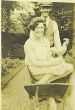

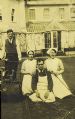
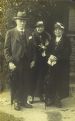


If so we have him on the 1921 Census with four other Watsons
a maid and a visitor.